
The Mugshot
On an image - of a man built on image - and its life cycle.

This is PR Machine, a newsletter about consciousness and culture and the sprawling treacherous jungle that lies between them. Subscribe to watch me navigate this wilderness in real time.
The power of the image has dissipated in the last century, sand slipping through a grate as mass media shot skyward, globalized, and eventually took on the chrome sheen of digitization. The presence of images, of course, has exploded; we’re bombarded by thousands daily. A Google search will tell you that the internet is host to 750 billion images, to be shared, saved, screenshot, reposted. This only accounts for 6% of those in existence: 12.4 trillion photos have been taken throughout history, a number that will double by 2030. An estimated 57,000 shutters click with each passing second. And then there’s the doctored duplicates, the crops, the slight variations.
All this to say that images — not reality, but constructions, depictions, exaggerations thereof — take up a large portion of our sensory intake. Life and image are slowly (or not-so-slowly) becoming inextricable; we’re not likely to let a day slip past without documenting some part of it, tearing off a corner and slipping it into our pocket. Friends of mine talk of the importance of the “archive,” a need to bottle moments. We narrate our lives through photos online, dictating external notions of our identities: We craft our image through images. Etcetera, etcetera. You’ve heard this before. I certainly have. In recent memory these behaviors were lodged as criticism by our elders, but the impulses of the smartphone generation have spread across age demographics. In any case, it’s impossible to imagine this current landscape without the advertising boom of the ‘50s, the media boom of the ‘90s, the tech boom of the ‘00s and ‘10s (boom boom boom — it feels very midcentury to use the sound of a bomb as a descriptor for industry growth). Preceding generations always seem to take issue with those that follow. There’s a sense it’s because they want us to succeed. Perhaps they just don’t like what they’ve created.
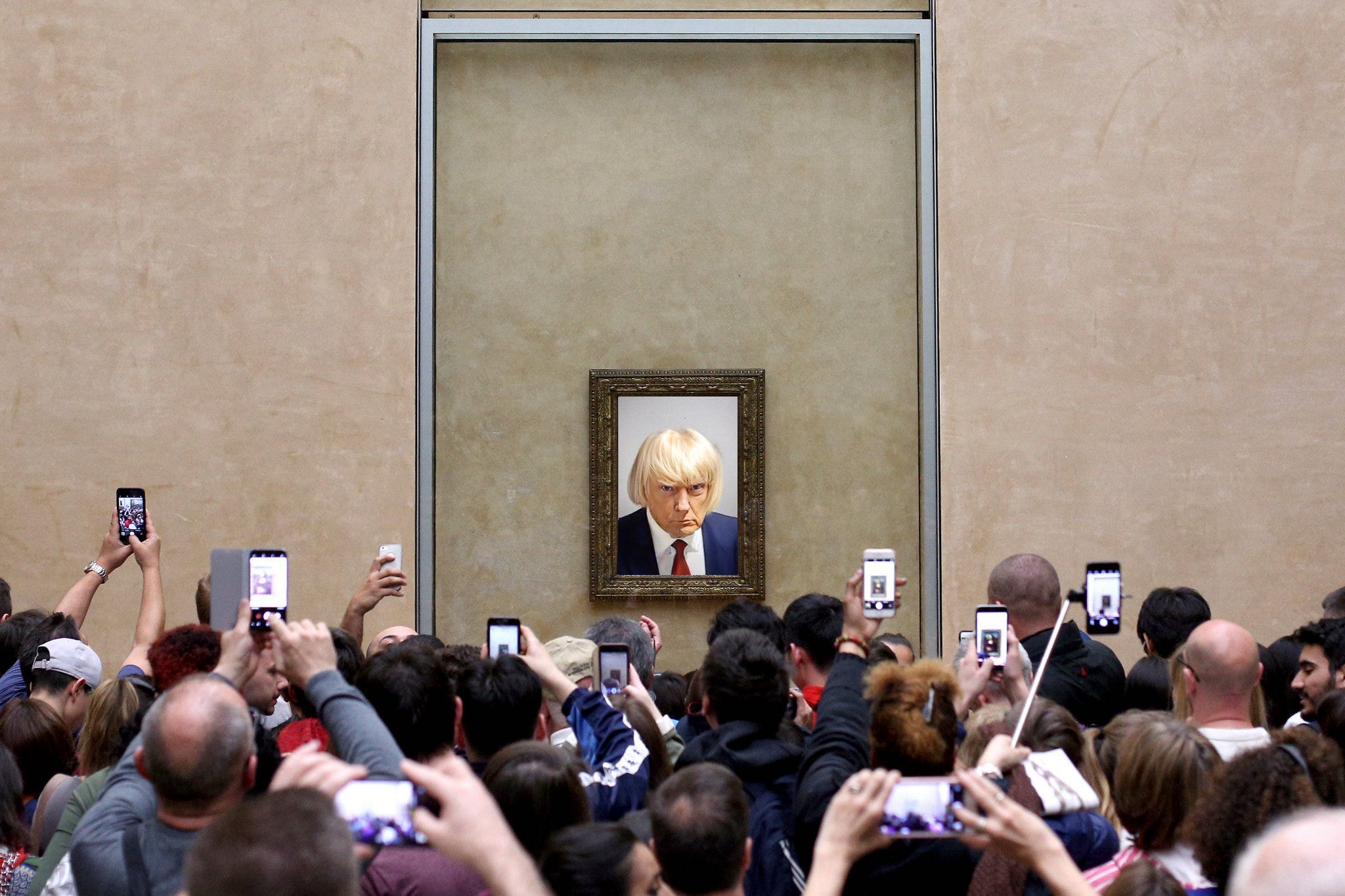
In a world so awash, it has become increasingly difficult for an image to shake things up, to cast a wide net, to break through the constant hum of content creation. There are events, subjects, that make waves, but with the abundance of cameras it is rarely ever a single image. I think of studying in Paris, the hollow taste of photographing the Eiffel Tower, standing in an array of others with their phones in the air. I knew this picture would mean nothing to me, but the urge was still present, the involuntary completion of a ritual. Even more fragmenting is the image of an image, the number of photos of the Mona Lisa sitting dormant in camera rolls around the world, all of the posters and postcards and notebook covers it’s been plastered onto. Reproduction chips at the value of the original. It’s the ethos behind Warhol’s prints (though I don’t like to give too much credit to a man who today would likely be making AI art and touting it as potent commentary), and why NFTs — where copy and original are visually indistinguishable, separated only by a certificate of authenticity — are completely nonsensical. To truly “own” a digital image (one that exists online, at least) is an empty endeavor.
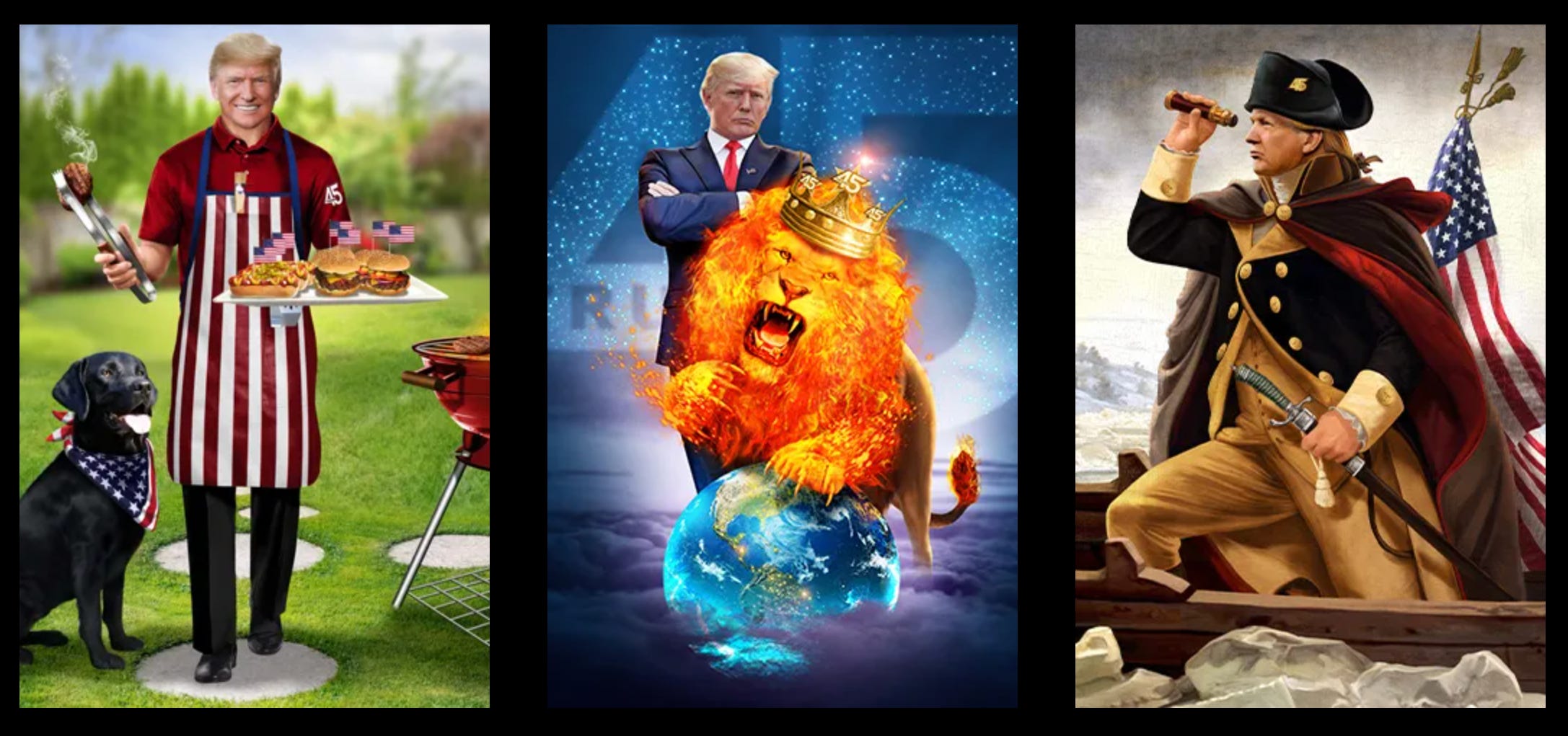
Donald Trump is the most photographed human on the planet. He sells collectible NFTs of himself photoshopped into different scenarios (he’s decked in camo in the woods; he’s a king on a chessboard; he’s an all-American dad flipping burgers — his ARTPOP could mean anything). There is no element of scarcity when it comes to his likeness. Still, long before the former president became inmate P01135809 at the Fulton County Sheriff’s office in Atlanta two weeks ago, anticipation had been building online for the release of his mugshot. Context was the point of interest here: The photo was to be a sign, for some, that justice was in sight, that the world’s most famous narcissist might be presented in the undignified light he so deserved, that accountability might be within reach.
A mug he certainly delivers — an actress at heart. That theatrical raise of the eyebrow. The don’t-tread-on-me scowl. This is not the forced cessation of performance many had hoped for. That’s the thing with narcissists: they always find a way to slip out of accountability. The lights come up, and he’s the righteous, defiant hero, the victim who refuses to be victimized, a perfect crest for the persecution narrative the right wing holds so near and dear to its heart.
What else could have been expected? Here is a man who’s built the entirety of his career on image. Image and narrative. Celebrity accounts for so much of his currency as a political figure. We’ve had Hollywood exports in the Oval Office before (hello, Reagan) but never have American politics come so close to theater, to pantomime: cartoonish appearance, bluntly simplistic vocabulary, repetitive cadences, Freudian size preoccupations, common-denominator policies… he is a walking caricature, a persona. His rhetoric trades reason for logical fallacies and familiar, digestible narratives that people absorb because it feels right. Think of that slogan, a perfect fusion of conservative tenets, of exceptionalism and reverence for the past (the great myth of right-wing America, that gold-old-days notion that all of the problems that exist now once did not), boiled down to its basest, most simplistic essence.
Recognizability and simplicity are of great value when it comes to branding. As is “storytelling,” a word used so much in the marketing world. Trump has all of these under his belt. The spray tan and golden combover are points of ridicule to some, but in a world so image-saturated, so sensorially overstimulated, these features put him in line with the Golden Arches or a glowing-red Target sign: bright-colored and instantly identifiable, a familiar and comforting brand. Like many corporations, Trump uses convenience as a selling point: politics without all the unnecessary critical thought, just tried-and-true American values and a simple us-versus-them mentality.
Once released, the mugshot inevitably bounced through the echo chamber of the internet, multiplying at each point of contact, its lifespan varying depending on what corner it found itself in. In my general circle this was no more than a few days; there were jokes likening him to Lindsay and Paris and other arrested starlets, photoshop jobs where he was given a cunty bob or a painted brow, comparisons to Taylor Swift’s reputation album cover. But by the following Monday — either from chronically-online desensitization, where nothing ever sticks for long, or just general wariness when it comes to engaging in Trump discourse — everything had largely died down.
DonaldJTrump.com is a different story. Like the Mona Lisa, it’s been slapped onto t-shirts, posters, coffee mugs, beer sleeves. “NEVER SURRENDER,” reads the caption. Co-opted as iconography, the image lives on as an extension of the man: a tool for branding and myth-making. And as with all those photos and recreations of the Mona Lisa, the potency and significance of the original image is washed out. This is all congruent with the motivations of the right, but merch from the left wing, too, has been popping up everywhere. Presented either with a rallying cry or a smug joke, the photo’s original context is being ripped apart from either side; now both ends of the political spectrum can carry out that knee-jerk American urge to align their identity through consumption.
I understand the impulse to satirize Trump. To draw a parodic cartoon of him is to draw a lifelike portrait. But terms like the Cheeto and the Oompa Loompa, aside from being trite and fairly un-clever, are a detriment. There’s a case to be made for going after him based on his own superficial values, but these are not the things that make him dangerous. To focus on the trivial only underplays a much darker reality. Many of the common criticisms begin to feel elitist, too — not toward him but toward his supporters. I feel wary of the conservatives that put him down, the ones that find fault with him not because of his policy, but because he brings no Honor to the Presidency. These people present the notion that Trump is an idiot — as are his hick followers — as Something We Can All Agree On. It leaves an uneasy feeling in my stomach.
Trump’s image is wielded endlessly, from all corners. It is a lightning rod, a glimmering attention magnet, brightly painted in shades of orange and gold. But even as he is indicted (again, and again, and again), the right wing continues to further a dangerous agenda. The deep-sea anglerfish is known for dangling a luminescent ray above its head. It’s flashy, like a phone screen, a News app alert, an Instagram story. It keeps you transfixed as the fish opens its jaws.
excellent
What dangerous agenda? Liberals really feel like they can just spout that sort of propaganda w no explanation. Sad.